Coffee Gear Review: KitchenAid Precision ‘French’ Press

Coffee Gear Review: KitchenAid Precision ‘French’ Press is a post written by FRSHGRND. If you’re viewing this on a third party’s website, please hit the link above to go directly to the source for a better experience 🙂 FRSHGRND – Coffee Reviews, Travel, Photography – Cafe Reviews & Coffee News for Thirsty Nomads

What we in the US call the “French” press is one of the more mainstream gateways to a heightened appreciation for coffee. If you had asked someone whether they were into coffee prior to the renaissance (or fad, depending) in theatrical methods like siphons and pour-overs, they would have likely responded in the affirmative by talking about how they love their French press. Then they’d complain about how annoying it is to clean.

kitchenaid-french-press-review-6974

While KitchenAid hasn’t solved the cleaning riddle yet, they have come out with an innovative upgrade for this humble brew method: the new KitchenAid Precision Press (above). It’s part of a full suite of “craft coffee” equipment the brand has launched to cater to mainstream consumers who are becoming, if not fully literate, at least more aware of the world of coffee that exists beyond dark roasts and “bold” cliches.

The Precision Press is the most unique item in the lineup – so, when Single Edition Media reached out on behalf of KitchenAid to sponsor a review, I asked them to send over the press. The double-walled metal construction for temperature stability is great, but not groundbreaking. What’s truly new, and what piqued my interest, is the built-in scale and timer. The timer begins counting up when you press a button on the handle, and resets if you hold it down. The scale can be tared quickly to weigh both coffee and water, and easily switches between grams or ounces depending on your preference.

This elegant combination brings the press up to speed with the modern coffee zeitgeist’s emphasis on consistency and measured brew ratios. Granted, bona fide coffee geeks have already stuffed their kitchens with several generations of accoutrements promising to improve their performance, from temperature probes to bluetooth-enabled scales; for everyone else, the Precision Press provides an all-in-one solution that’s likely to be an appealing, straightforward way to gain access to more consistently good coffee.

Hands-on

kitchenaid-french-press-review-6965

The Precision Press is well made, with little features you’d expect at this admittedly high price point ($149 MSRP, though it goes for less at some retailers). Design-wise, the chrome looks great, though it is a pain to keep perfectly shiny. I dig the blacked-out LCD with white illuminated numbers. Inside, the edges of the mesh filter are lined with a rubber gasket that promises to reduce unwanted fine particles sneaking into your cup – though it does take a bit of force to push the filter in as a result.

kitchenaid-french-press-review-7001

kitchenaid-french-press-review-7034

I appreciate the focus on simplicity and functionality, but I would have liked the ability to set the timer to count down to an alarm (perhaps using a button to add time in 30 second increments). As currently designed, the timer only counts up after you start it.

kitchenaid-french-press-review-7038

Presses have a reputation for being hard to clean, but the upside is that you have one less expense (paper filters) and one less item added to your waste stream. I found it painless to clean with the aid of a fine mesh sieve I had lying around (see above, swish some water in the press and pour out the used grounds, it’ll catch all but the finest particles), plus a long-handled bottle brush to scrub. You’ll want to disassemble the mesh filter after every couple brews to give it a deeper clean.

One thing you will want to be careful of with this press is that the electric components are not fully waterproof. I didn’t run into any issues despite washing it pretty haphazardly, without minimizing splashes – but the instructions do warn against immersing it in water so I’d be cautious.

Putting the press to use:

kitchenaid-french-press-review-6981

I hadn’t used a French press in ages because all of my glass examples have broken over the years – something this sturdy KitchenAid press won’t do without some effort. I found my reunion with the press to be a nice change of pace from my usual fussy routine with an Aeropress or pour-over kettle. It won’t replace those brew methods for me, but it does provide a nice, stress-free alternative — as well as a totally different flavor profile.

The basic premise of the French press is that you pour your coffee and hot water into the pot, wait a while, then press the filter down and pour the brewed coffee out. The mesh metal filter allows more soluble material to pass through into the cup than paper filtered methods do – accentuating the sweetness of a coffee and introducing a richer flavor profile, in my experience, though sacrificing some of the clarity and crispness you get with paper filters. Geekier readers will know this already and probably go so far as to choose their brew method based on what they want to highlight in their coffee.

Regardless of your level of geekiness, you’re going to want to use a burr grinder to get the best results with a press like this. If you don’t own one already, spend your money there first. A cheap blade grinder will produce too many fine particles that slip right through the mesh filter, ending up as bitter sludge in your cup – not to mention unevenly extracting and wrecking your brew.

So, with the background out of the way, here’s a rough guide to get you started:

  1. Weigh out your coffee using a ratio of around 1 gram of coffee for every 14-16 grams of water (the KitchenAid Precision Press manual has a handy table with pretty good numbers to go by).
  2. Grind your coffee using a very coarse setting – go coarser if you find the cup tasting unpleasantly bitter, and go finer if it’s tepid or too tea-like. If you have a tough time here, next time you buy beans at a reputable cafe ask them to grind some of your coffee for French press and keep it as a reference point.
  3. Briefly pre-heat the pot with some boiled water. Then mix your coffee and brew water (I aim for around 200-205F).
  4. Make sure the grounds are fully submerged – give a slight stir if needed after the crust has formed. Let it steep for a total of 6-8 minutes. (You can aim for shorter brew times, but a longer steep allows you to use a coarser grind and gives you a better final cup with less fines).

Simple, right? Adjust the grind or the steeping time up or down until you find the sweet spot. That’s where the built in scale and timer show their true value: you’ll know what worked or didn’t, and be able to repeatably get the flavor you want.

And that’s what makes this a compelling entry for folks who are interested in making better coffee without investing in a drawer full of gadgets or narrow-margin-for-error brew methods.

You can follow developments with KitchenAid’s craft coffee products on Facebook, Twitter, Pinterest, and Instagram.

KitchenAid Craft Coffee Brewers

Nice Package: Koppa Coffee of Kraljevo, Serbia

Koppa-1

We’re pretty excited for this one. Meet Koppa, a coffee company proudly waving the Third Wave coffee flag for Serbia and standing out by way of their truly gorgeous and distinctive packaging. This is the first time we’ve featured a Serbian coffee company on Sprudge, but if Koppa’s design and ethos are any indication, it won’t be the last. Calling this work a “nice package” is kind of an understatement!

Remember this brand. Koppa of Serbia is up to something pretty remarkable.

As told to Sprudge by Radoslav Plešinac.

When did the package debut?

World of Coffee 2015 Gothenburg after one month of design and development.

Koppa-6

Who designed the package?

Koppa coffee project is established 2007. We started with roasting three years later when we created the proper conditions, and after many hours spent learning about the coffee and roasting process. We are speciality coffee pioneers in Serbia.

Koppa-9

Please describe the look in your own words.

We created a clean, minimalistic-looking coffee box with the home consumer in mind. In each box you will find transparent resealable zip lock bags, where consumers can easily see the coffee beans, roasting level, and how much coffee is left.

Koppa-11

What coffee information do you share on the package? What’s the motivation behind that?

Our coffee boxes have information about country of origin, region, and farm, as well as producer or washing station, variety, process, altitude, and tasting notes. It is very important to know where your coffee comes from, and who processed that coffee, to make a better connection between the consumer and the farm/farmer.

Koppa-10

Where is the package manufactured?

Noble Environment in Serbia manufactured all of the coffee box parts for us, with printing by Kvark. The transparent bags are made in Japan.

Koppa-12

Is the package recyclable?

A box is made from Ecor, 100% recyclable, USDA-certified 100% bio-based material. Ecor’s manufacturing process uses no additives, only clean cellulose fiber and pure water, often rain water. Water is recycled and reused through the entire manufacturing process.

Nice Package is a feature series by Zachary Carlsen on Sprudge. Glimpse other Nice Packages here.

Photos provided by Radoslav Plešinac.

The post Nice Package: Koppa Coffee of Kraljevo, Serbia appeared first on Sprudge.

Fair Trade Certified Coffees

Consumers who prefer to buy coffees that promise to reconcile pleasure with generosity toward the people and environment responsible for that pleasure, and who want to feel some solid confirmation regarding the generosity part, should find useful recommendations among the ten coffees reviewed this month. Nine of the ten are Fair Trade Certified, meaning that, according to the certifier, Fair Trade USA, small-holding farmers were paid a price for these certified green coffees that, based on a yearly updated formula, gave the farmers a “fair” or economically sustainable return for their production. A tenth reviewed coffee was certified by an organization using parallel criteria to Fair Trade USA. In addition, all ten reviewed coffees are certified organically grown, which, taken together with Fair Trade Certification, places them into a market category the coffee industry calls Fair Trade/Organic (FTO).

Assuming this pair of third-party certifications is enough to satisfy skeptical consumers’ socio-economic and environmental concerns, what about the pleasure part?

Eight at 90 or Better

Of the nineteen certified coffees we tested, eight rated 90 or higher, an excellent showing. Five others rated 87 to 88, a decent showing, leaving only six rated 86 or lower.

However, this impressive performance is mainly owing to coffees from one origin. The five top-rated coffees, all 91 to 93, are Ethiopias. By comparison, only two Central America coffees attracted a 90-or-better rating: the spicy, nutty Ghost Town Guatemala CODECH (90) and the deeply chocolaty Paradise Roasters FTO Guatemala Huehuetenango (90). A gently pungent Peru from Giv COFFEE (90) filled out the complement of eight 90-plus reviews. We also reviewed two solid 88-rated coffees, the sweet-savory, perfumy Honduras Finca Gaby from Magnolia Coffee and the crisply pungent Roast House 423 Blend, comprised of Fair Trade/organic coffees from Guatemala, Mexico and Indonesia.

Ethiopia Explanation

The dominance of the Ethiopia coffees is probably attributable to three factors. As always, the complexity and originality of the native varieties of Arabica grown in the southern and western parts of the country give Ethiopias a sensory edge, no matter what the theme of the cupping. Second, the ongoing epidemic of leaf-rust disease in Central America constitutes a persistent challenge for all producers in the region, but particularly, perhaps, for small-holding farmers like those responsible for most of the region’s Fair Trade/organic-certified production. Also, the seasonal timing of our cupping may have discouraged the submission of more Fair Trade Certified coffees from Peru, one of the countries where the Fair Trade program has been most successful.

Sustainability Gone Mainstream

Finally, and most controversially, it is possible that Fair Trade certification may be losing its value as a marketing differentiator for coffee in the U.S. In other words, the Fair Trade seal may not give a coffee and a roaster quite as powerful a boost with consumers as it once did, encouraging a further shrinking of the pool of top Fair Trade Certified coffees available for our cupping. Not because specialty roasters or their customers have lost interest in sustainability for small-holding farmers and other farm workers. Rather, because that commitment appears to have diffused and gone mainstream.

In 1999, when Fair Trade Certified coffee was first launched in the U.S. under the leadership of Paul Rice, there was only one other significant coffee certification: organic. Now there are multiple certifications addressing an overlapping array of socio-economic and environmental concerns. They include major third-party-verified certifications like Rainforest Alliance and UTZ Certified, plus smaller, more specialized certifications like Smithsonian Bird Friendly. Starbucks has its own Café Practices certification, Nespresso its admired AAA Sustainable Quality Program. Mainstream coffee companies have led in the founding of the 4C Association, which sets “an entry-level standard that defines a global common baseline and starts all coffee supply chain actors on the path to the sustainable production, processing, and trade of coffee.”

Additionally, adherents of the loosely defined group of practices called Direct Trade make the argument that their independent efforts to build long-term relationships with producers by paying more for distinctive coffees net better money for those producers and better coffees for their customers in ways that both supplement and exceed what can be achieved through certifying programs like Fair Trade.

And Fair Trade USA itself has modestly widened its mission. Originally available only to democratically run cooperatives of small producers, Fair Trade Certification is now available to groups of small producers who work with a single exporter or wet mill, as well as to some qualifying farms or estates. Nevertheless, Fair Trade USA remains primarily focused on small-holder cooperatives. Ben Corey-Moran, Director of Coffee Supply for Fair Trade USA, points out that 95% of its certified coffees continue to originate with democratically managed cooperatives of the kind that Fair Trade Certification was originally designed to promote and support.

More Pressure on Fair Trade

Other trends are haunting Fair Trade Certified. The rigorously monitored farm-to-cup integration of the Fair Trade Certified movement appears to be unraveling a bit, for example. Three of the ten high-rated coffees we review this month were produced by Fair Trade Certified cooperatives, but because the three roasters retailing these coffees are currently not Fair Trade Certified, they cannot display the Fair Trade USA seal on packaging or websites. The complex reporting and record-keeping involved in maintaining Fair Trade certification is doubtless daunting for smaller roasting companies, as it is for some farmers. The time and effort involved in maintaining certification may make sense for roasting companies that make Fair Trade Certified a major element in their identity and marketing, but it may not for those small companies that simply want to offer one or two good Fair Trade Certified coffees as part of a general product mix.

“Fairly Traded”?

For the record, anyone can call coffees “fair trade” or (the current favorite among copy writers) “fairly traded,” since neither term is the intellectual property of Fair Trade USA. However, only coffees for which the entire supply chain is certified by Fair Trade USA, from producer through importer to roaster, can legally display the Fair Trade USA seal and call its coffees “Fair Trade Certified.” Some complain that this tight vertical monitoring of the supply chain is limiting and coercive. On the other hand, Fair Trade USA also can justifiably complain that roasters who are not certified are freeloading, since Fair Trade USA has invested heavily in the formation and publicizing of the fair trade concept, as well as in helping cooperatives of small holders to produce more and better coffees over the long term.

Nevertheless, even if the institution we know as Fair Trade USA is eventually swamped in a sea of competing certifications, roaster defections and ambiguous marketing language, I would argue that it has honorably and successfully served its cause by pioneering the case for action in support of small-holding coffee producers who for decades have been routinely crushed by the logic of a commodity system pursuing price and volume largely absent of any consideration of environment, people, or quality of goods and experience. Fair Trade Certification itself could perhaps wither (I hope it does not), but it appears that its cause has an enduring life and power.

The post Fair Trade Certified Coffees appeared first on Coffee Review.

Yoshikazu Iwase: Japan’s Two-Time Barista Champion

yoshikazu iwase japan barista championship world barista coffee sprudge

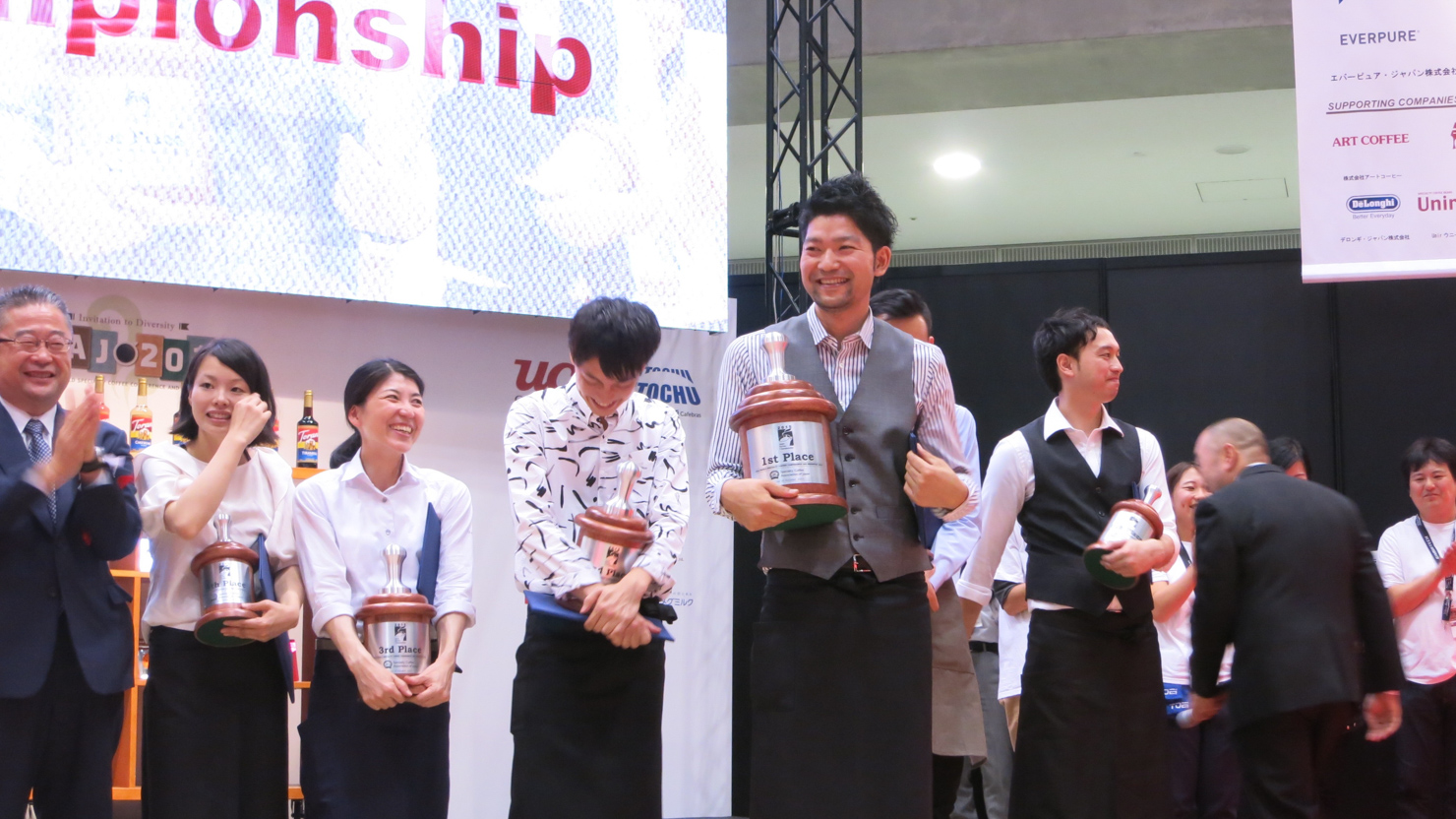
For competition baristas around the globe, the long road to the World Barista Championship has begun, leading up to the event next June in Dublin, Ireland. On the road to Dublin we’ll be interviewing newly crowned national champions along the way. And at the recent Japan Barista Championship in Tokyo, Sprudge staff writer Hengtee Lim sat down with newly-crowned JBC winner Yoshikazu Iwase of Rec Coffee.

Congratulations on your win! How does it feel to have won for the second time?

Thank you very much. Victory in the Japan Barista Championship is very difficult. All of the baristas bring great coffee and give great presentations. I’m really happy I could win this year. At the World Barista Championship 2015 in Seattle, I came seventh, and I regret that result. So for me, this was both a very special and hard competition—filled with feelings of wanting to stand once more on the world stage.

yoshikazu iwase japan barista championship world barista coffee sprudge

What was your signature drink recipe?

I started with four shots of Ninety Plus Gesha Estates washed process espresso, which are cooled. After placing rock ice in a mixing glass, you add the espresso along with 1 gram of orange juice and 28 grams of gesha cherry honey syrup, and then stir.

(Gesha cherry honey syrup is slowly extracted from a mix of 10 grams of cascara in 50 grams of hot water, with 50 grams of Acacia honey.)

yoshikazu iwase japan barista championship world barista coffee sprudge

Can you tell us a little more about your signature drink? What was the inspiration, and what flavors did you aim to highlight?

The Ninety Plus Gesha Estates washed process coffee has a fantastic sense of terroir—there are both citric and floral notes in it. My signature drink began from a desire to add the flavor and sweetness found in the natural process coffee.

The cascara (gesha cherry) used in my signature drink is actually taken from the washed process during pulping. It adds a cherry pulp sweetness. By using this, it was also a chance for me to pay homage to the pickers, who give their best to pick the best.

yoshikazu iwase japan barista championship world barista coffee sprudge

Can you tell us about your choice of beans? When did you first encounter them? Why did you choose to use both the washed and natural processed coffee in your presentation?

The coffee I used was Ninety Plus Gesha Estates Panama. At this plantation, they’re testing a variety of production processes, and in this competition I used the washed and natural.

I first visited the plantation in December of 2014. I was captivated by it—by the picking, the processing, the blazing red coffee cherries, and the wonderful environment on the farm. The coffee made here is really elegant—they put their heart into their work.

As a washed coffee, you get an expression of the terroir of the plantation. As a natural coffee, you get an attractive flavor and sweetness, added to the taste of the washed.

My espresso and signature drink used the washed coffee—this was an opportunity to share that amazing quality and terroir. In my milk beverage, I used the natural, bringing attention to the attractive flavor inherent in the beans. By experiencing both processes, you come to experience and understand the charm in this plantation’s coffee.

Looking back at last year’s WBC, and thinking about a second run, how do you want to prepare for your next chance on the world stage?

Seventh place last year is a result I regret. The WBC is a truly wonderful competition, and the baristas that gather there all bring beautiful coffee stories with them. I feel that in order to win the competition, I have to start over, and become a beginner all over again. I want to bring a beautiful coffee and a presentation experience that shocks the world.

Hengtee Lim (@Hent03) is a Sprudge.com staff writer based in Tokyo. Read more Hengtee Lim on Sprudge.

The post Yoshikazu Iwase: Japan’s Two-Time Barista Champion appeared first on Sprudge.

Peet’s Buys Stake in Intelligentsia

On the heels of its acquisition of Portland’s Stumptown Coffee Roasters, California-based Peet’s Coffee & Tea has bought a majority stake in Intelligentsia Coffee. Read more coverage at Fortune.com.

Coffee Review has rated 40 Intelligentsia coffees over the years, starting with their famous Black Cat Blend in way back in 1998. The average rating for Intelligentsia’s coffees is an excellent 89.8 points.

See all Intelligentsia Coffee ratings

The post Peet’s Buys Stake in Intelligentsia appeared first on Coffee Review.

Catación Pública – must-visit cafe in Bogotá

Catación Pública – must-visit cafe in Bogotá is a post written by FRSHGRND. If you’re viewing this on a third party’s website, please hit the link above to go directly to the source for a better experience 🙂 FRSHGRND – Coffee Reviews, Travel, Photography – Cafe Reviews & Coffee News for Thirsty Nomads

catacion-publica-bogota-colombia-FRSHGRND-5595

Up on a hill in Usaquén, in the northern part of Bogotá, I had the pleasure of meeting Jaime Duque, owner of Catación Pública – and a man on a mission. You see, for many in Colombia, like most countries where coffee production is a major sector of the economy, the best coffee is often ironically out of reach. The highest grade coffee is shipped overseas for sale in foreign markets with stronger currencies and consumer purchasing power. Local markets often end up with the less valuable, lower quality remainder.

Jaime’s goal is to change all that using the cafe as a “coffee university,” introducing Bogotá’s growing middle class to high end coffee, from basic concepts that distinguish quality-focused coffee, to techniques for brewing better coffee at home. The coffee menu, roasted in house, features an array of brewing techniques for a broad range of coffees grown around the country (21 origins when I visited), with an emphasis on farms in Colombia’s lesser-known growing regions. The result (or, at least, the promise) is a kind of intimacy between grower, roaster, barista – and consumer – that the majority of coffee companies in importing countries can only dream of.

But Catación Pública, which translates roughly to “public cupping,” is even more ambitious than that. In the rear of the cafe sits a serious coffee lab and roastery, with plaques attesting to numerous SCAA (Specialty Coffee Association of America) certifications. On top of that, the facility is set up to conduct Q-Grader training, a rigorous sensory evaluation and accreditation program established by the Coffee Quality Institute to create a common language around coffee quality standards to align players across the supply chain. In a coffee producing country like Colombia this is particularly valuable. A common language around quality can help guide farmers toward steps to improve their coffee to obtain the higher prices that sustain both livelihoods and investments in consistent quality.

catacion-publica-bogota-colombia-FRSHGRND-5590

catacion-publica-bogota-colombia-FRSHGRND-5645

catacion-publica-bogota-colombia-FRSHGRND-5630

Above, QR codes that link to academic articles on the health benefits of coffee.

catacion-publica-bogota-colombia-FRSHGRND-5622

Above, preserved coffee cherries (cascara). Delicious, and great paired coffee.

catacion-publica-bogota-colombia-FRSHGRND-5604

catacion-publica-bogota-colombia-FRSHGRND-5643

catacion-publica-bogota-colombia-FRSHGRND-5676

catacion-publica-bogota-colombia-FRSHGRND-5669

catacion-publica-bogota-colombia-FRSHGRND-5664

catacion-publica-bogota-colombia-FRSHGRND-5657

Red lights for Q-grader sensory evaluation training – it makes it impossible to use color as a cue and forces you to focus on other senses.

catacion-publica-bogota-colombia-FRSHGRND-5654

Just a few certificates from the SCAA, SCAE, and Q-Grader program here.

According to Jaime, this is the first privately created coffee quality lab of its kind – an idea that might sound a little crazy, but he’s committed to helping farmers improve quality. The plan is to offer consultations for farmers based on samples sent in to the lab, beginning with Colombia, with visions extending across Latin America.

Jaime is well equipped to lead a charge like this, having worked as an agricultural engineer with the Colombian coffee grower’s federation (FNC) for nearly 20 years. His tenure included a role in establishing the El Agrado coffee lab, which helps transfer scientific knowledge and best practices to coffee growers, helping them improve productivity, sustainability, and quality. Those efforts, revolutionary at the time, helped reduce defects among participants (i.e., unsalable coffee) from 18% to 1.5%, providing a demonstrable impact on coffee growers’ livelihoods and a model for the entire coffee industry.

Only a little more than a year old, Catación Pública is already an ambitious cafe, roastery, and so much more. The passion and potential here is palpable, and made the visit one of the most inspiring I’ve had in the history of this blog. If you’re in Bogotá, I can’t recommend a visit highly enough.

Other things to do in the neighborhood:

Also, in the same neighborhood several doors up the street you can grab a bite to eat at the beautiful Abasto Bodega (see photos below). If you go on a weekend, check out the famous local flea market as well.

catacion-publica-bogota-colombia-FRSHGRND-5493

Abasto has several locations; the one up the street from Catación Pública is a Bodega in a beautifully tactile space filled with brick, metal, wood, and luminous produce.

catacion-publica-bogota-colombia-FRSHGRND-5543

catacion-publica-bogota-colombia-FRSHGRND-5572

catacion-publica-bogota-colombia-FRSHGRND-5560

Bananas that haven’t been shipped to market on a boat… so much good fruit here!

catacion-publica-bogota-colombia-FRSHGRND-5559

Yogurt, granola, strawberries.

catacion-publica-bogota-colombia-FRSHGRND-5548

Check out more photos of the neighborhood over at my other blog, ArtMundane.

Catación Pública Address & Directions:

Calle 120 A # 3A-47

Usaquén, Bogotá, Colombia

See map below:

Crimson Cup, Propeller Named Roasters of the Year

Crimson Cup Coffee & Tea and Propeller Coffee Co. were awarded Roaster of the Year honors by Roast magazine, an industry publication for coffee roasters.

According to Roast, Roaster of the Year awards “recognize companies that roast coffees of superior quality, exemplify a dedication to sustainability, promote employee and community education, and demonstrate a strong commitment to the coffee industry, among other criteria. The magazine awards top honors in two categories: Micro Roaster of the Year, for companies roasting fewer than 100,000 pounds of coffee each year; and Macro Roaster of the Year, for companies roasting more than 100,000 pounds annually.”

Crimson Cup was named Macro Roaster of the Year. The roaster, based in Columbus, Ohio, was recognized for its focus on education, work cultivating relationships with coffee growers around the world, its substantial commitment to supporting local charities, and the development of a number of innovative cold-brew products.

Propeller Coffee, based in Toronto, Canada, was name Micro Roaster of the Year. Propeller was recognized for its “commitment to sustainability — from the company’s energy-efficient downtown roastery and complete reliance on renewable energy to its innovative transportation solutions and high-efficiency natural-gas-powered roaster.”

See Crimson Cup reviews

See Propeller Coffee reviews

The post Crimson Cup, Propeller Named Roasters of the Year appeared first on Coffee Review.

Crimson Cup, Propeller Named Roaster of Year

Crimson Cup Coffee & Tea and Propeller Coffee Co. were awarded Roaster of the Year honors by Roast magazine, an industry publication for coffee roasters.

According to Roast, Roaster of the Year awards “recognize companies that roast coffees of superior quality, exemplify a dedication to sustainability, promote employee and community education, and demonstrate a strong commitment to the coffee industry, among other criteria. The magazine awards top honors in two categories: Micro Roaster of the Year, for companies roasting fewer than 100,000 pounds of coffee each year; and Macro Roaster of the Year, for companies roasting more than 100,000 pounds annually.”

Crimson Cup was named Macro Roaster of the Year. The roaster, based in Columbus, Ohio, was recognized for its focus on education, work cultivating relationships with coffee growers around the world, its substantial commitment to supporting local charities, and the development of a number of innovative cold-brew products.

Propeller Coffee, based in Toronto, Canada, was name Micro Roaster of the Year. Propeller was recognized for its “commitment to sustainability — from the company’s energy-efficient downtown roastery and complete reliance on renewable energy to its innovative transportation solutions and high-efficiency natural-gas-powered roaster.”

See Crimson Cup reviews

See Propeller Coffee reviews

The post Crimson Cup, Propeller Named Roaster of Year appeared first on Coffee Review.

11 Crazy Coffee Drinks You Won’t Find on a Starbucks Menu

I don’t know about you but sometimes I feel myself getting into a coffee rut. I mean, you can only order so many half-caff, low-fat, no whipped cream macchiatos before you start to feel like you are missing out on things the greatest drink in the world can offer.

Well, no more.

It turns out that cultures around the world have developed an abundance of alternative ways to make (and drink) coffee, including everything from lemon juice to eggs to alcohol.

So set your french press and v60 aside for a minute and learn about these crazy coffee drinks.

#1 Turkish Coffee

turkish-coffee

Turkish Coffee by Quinn Dombrowski

You have probably heard of, if not tried, this one.

Turkish coffee is consumed all over the world but it is the drink of choice in many parts of (you guessed it) Turkey, the Middle East and Eastern Europe.

It is a drink steeped in history, going back well over 400 years with the recipe changed very little.

The preparation is relatively simple. You take water and sugar (recipe in link below) and boil them together before adding a very fine mix of coffee and cardamom powder and reboiling. After boiling, let it sit briefly to foam before pouring it, grounds and all, into a small cup (think Italian espresso cup).

You then sip slowly and enjoy. The slowly part is key here because if you do not, you learn the hard way what mouth full of coffee and cardamom powder tastes like.

Recipe: Preparing a Traditional Turkish Coffee (I Need Coffee)

#2 Vietnamese Iced Coffee

Vietnamese Coffee Brewer

From How to Brew Vietnamese Coffee

Next, we head over to Asia where hot drinks have been commonplace for eons.

Vietnamese coffee has gained popularity over recent years, so you have probably heard of it. It is immensely popular on the streets of Vietnam and variations of it appear all over Southeast Asia.

It is essentially a two-layer ice coffee with sweetened condensed milk as the base with black coffee in the middle and a foam on top. It is traditionally served over ice and made using robusta beans (not my favorite) but using arabica and drinking it hot is just as enjoyable.

Recipe: How to Brew Vietnamese Iced Coffee (I Need Coffee)

#3 Oliang (Thai Coffee)

thai-iced-coffee

Thai Iced Coffee by Chris Goldberg

Now just a hop, skip and a jump over to Thailand where we find Oliang, or Thai iced-corn-soya bean-sesame coffee.

Oliang is made by taking your coffee and additional ingredients blend (see recipe below), putting it into a coffee sock, pouring boiling water through it and letting it steep for ~10-15 minutes before adding sugar and pouring over ice. You then add sweetened condensed milk (how they do it on the streets of Bangkok), pop in a straw and enjoy!

If for some reason you are opposed to the sock method, you can simply steep the coffee blend in hot water for the same time and then filter it (it won’t be traditional though).

Recipe: Thai Iced Coffee Recipe (Oliang) (Temple of Thai)

#4 Yuan Yang (Coffee with Tea)

coffee-tea-pour

Photo by Petra Bensted

Coffee? Tea? Why not some of both? Yuan yang is a favorite drink in Hong Kong; so much so that the Starbucks stores in Hong Kong actually had a limited time offering of it as a Frappacino.

Yuan Yang is made by making strong black tea in a pot, stirring in evaporated or sweetened condensed milk and coffee, then sweetening to taste. Add some shortbread cookies and you have yourself an Asian twist on high tea.. ahem, coffee.

Recipe: Hong Kong Yuan Yang Tea (Food.com)

#5 Mazagran (Portuguese Lemon Coffee)

lemon-coffee

Next we head over to Portugal where they have found other unique takes on coffee, specifically adding lemon to it. Now you may not think that coffee and lemon sounds intuitive, but this iced drink can actually be incredibly refreshing.

It is essentially a coffee lemonade made by taking strong coffee and mixing it with lemon juice and sugar to taste. You then pour it all over ice, kick back and enjoy your fresh take on lemonade.

Recipe: Portuguese Coffee Lemonade (Mazagran / Capile) (Cooking with Alia)

#6 Greek Frappé

greek-frappe

Greek Frappé by Tilemahos Efthimiadis

Staying in Europe, another refreshing take on the world’s greatest drink; the renowned frappé, especially loved throughout Greece.

To make, you add a small amount of cold water, instant coffee and sugar to a jar or shaker and shake vigorously for 10-20 seconds or until it is incredibly foamy.

You then pour the mixture over ice, add water and milk to taste and voila, you have created a frappé!

Recipe: Greek Frappe Recipe (I Need Coffee)

#7 Swedish Egg Coffee

eggs

Photo by Kevin Choi

Now up to Scandinavia where they have created a new take on coffee for breakfast. Popular in both Sweden and Norway, egg coffee is exactly what it sounds like.

To make it, you mix raw egg with coffee grounds and a small amount water and mix it until it has the consistency of, well, an egg-coffee slurry. You then take the slurry, pour it into a pot of boiling water, mix, strain and serve.

The result is supposedly one of the smoothest and creamiest cups of coffee you will ever have; make sure you use good eggs though.

Recipe: Swedish Egg Coffee (The Iron Buzz)

#8 Irish Coffee

irish-coffee

Irish Coffee by Chris Arnold

Alcohol and coffee, what else do you really need? Almost everyone has heard of, if not tried an Irish coffee, though most people simply use Baileys rather than making the real thing.

All you need for this bonafied beverage is your coffee of choice, Irish whiskey, brown sugar and some whipped heavy cream (or just whipped cream from a can if you’re lazy).

It makes an excellent after-dinner dessert drink, or, you know, something for breakfast.

Recipe: The Best Irish Coffee in the World (I Need Coffee)

#9 Pharisäer (German Rum Coffee)

german-pharisaer-coffee

Pharisäer by Agnes Chang

Continuing our alcoholic trend, Pharisäer, or rum coffee. It is a decadent drink that originated in Germany but can really be enjoyed anywhere in the world.

Similar to the Irish method, you simply take your favorite strong cup of coffee, add sugar and then add in a shot (or more) of rum before topping with whipped cream and a dusting of cocoa. Also, a good thing to remember is that you are not technically supposed to stir this drink once it is assembled, but rather sip it through the layer of whipped cream.

Recipe: Pharisees Coffee with Rum – Pharisaeer (About.com)

#10 Cafe de Olla (Mexican Coffee)

cafe-de-olla-coffee

Cafe de Olla by Chris Arnold

Nearing the end of our trip is cafe de olla or Mexican cinnamon coffee. While it does not contain alcohol, it is similar to Irish coffee or a pharisäer in that it is more of a dessert than drink, but there is no shame in that.

It is incredibly easy to make, you just take water, coarse coffee, brown sugar, and a cinnamon stick and boil it all together. You then take it off heat and let it infuse for about 10 minutes before straining and serving; you can optionally add whipped cream for extra richness.

The cinnamon pairs excellently with the coffee and adds another depth of flavour while the brown sugar adds decadence that plain white lacks.

Recipe: How To Make Mexican Coffee (Cafe de Olla) (MrBreakfast.com)

#11 Ethiopian Coffee Ceremony

ethiopia-coffee-ceremony

Ethiopian Coffee Ceremony by Matt Handy

Last on our crazy list is more of a ritual than a type of drink, but bears an honorable mention. Similar to a tea ceremony in Japan, the coffee ceremony takes into account everything from the type of cups and pot that are used to the atmosphere of the environment.

It is traditionally performed as a sign of friendship and welcoming and should never be turned down as it would be a great insult to the host.

To begin, the woman (traditionally it is a female that performs it) will burn incense to ward away evil spirits and will continue to burn it throughout the ceremony. She will then set a jebena, or clay coffee pot, filled with water and place it over heat before taking green coffee beans and cleaning them over hot coals.

After the heat removes the husk, the hostess will then proceed to roast the beans over the hot coals similar to how one might use the stove to make popcorn; she will typically roast the beans until they are medium to dark brown.

The freshly roasted beans are then ground in a mortar and pestle and added to the jebena where the entire mixture is brought to a boil before serving in handle-less cups.

The entire process can take several hours and each part should be treated with reverence and respect. If you ever get the chance to attend a ceremony be sure to take advantage of the opportunity!

Ritual: Coffee Cultures: Eritrea and Ethiopia (I Need Coffee)

Conclusion

So there you have it 11 unique and crazy ways to spice up coffee, not that it needs it.

Go out and impress your friends and never let your coffee be dull again!

The post 11 Crazy Coffee Drinks You Won’t Find on a Starbucks Menu appeared first on I Need Coffee.